少林柔拳中松夸
Song Kua in Shaolin Rou Quan

FREE ARTICLE. ONLY FOR READING PURPOSES
Copyediting: Information and Relations Office "EPOS"

Σουνγκ Κουά στο Σαολίν Ρόου Τσουάν


The Essence of Relaxation and Expansion

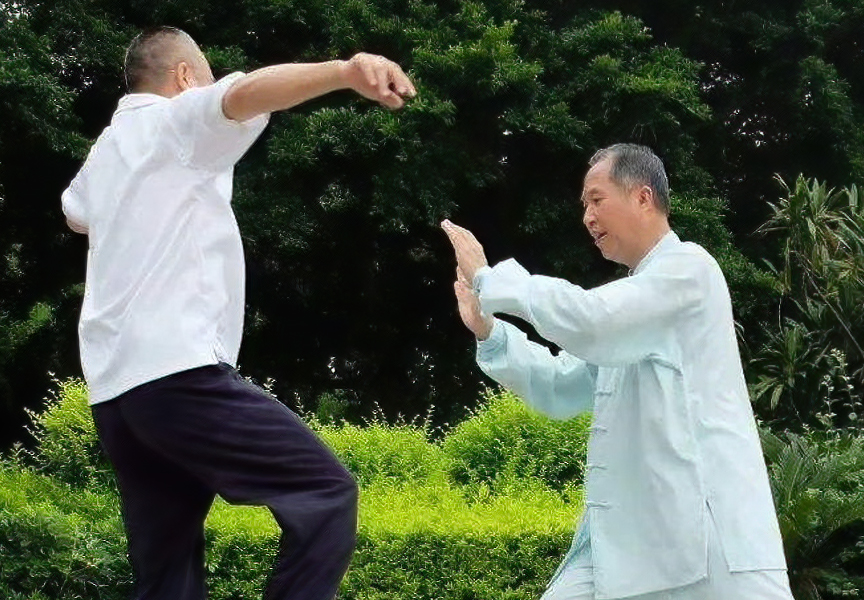
Shaolin Rou Quan, is a Chinese Shaolin martial art that emphasizes the principles of balance, harmony, and the cultivation of internal energy. One crucial concept in Shaolin Rou Quan that encapsulates the essence of its movements is Song Kua -[Chin.: Sōng kuā 松夸], which can be translated as (relax the hip joints) or (open the crotch.)

Understanding and embodying the principle of Song Kua is fundamental to the practice of Shaolin Rou Quan, as it plays a pivotal role in achieving a state of relaxation, rootedness, and effective energy flow. Let's delve into the significance of Song Kua and how it shapes the practice of Shaolin Rou Quan.

The Anatomy of Song Kua

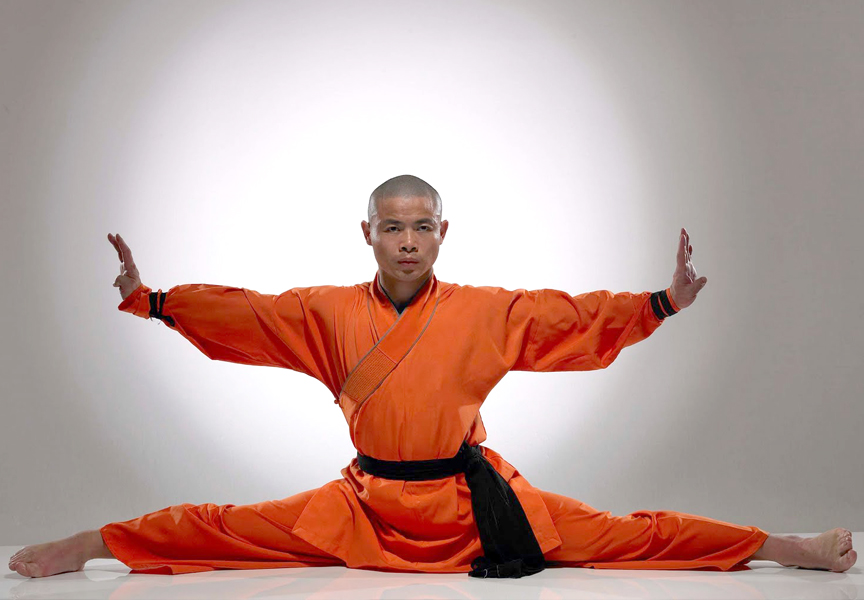
In the context of Shaolin Rou Quan, the term "Kua" refers to the hip joints, which are crucial for maintaining balance and generating power in martial arts movements. "Song" means to relax or loosen. Combining these concepts, Song Kua instructs practitioners to maintain a relaxed and open state in the hip joints.

The area around the hips is considered a central hub for the circulation of energy, known as "qi" in Chinese philosophy. By relaxing the hip joints, practitioners can facilitate the smooth flow of qi throughout the body, allowing for greater flexibility, balance, and responsiveness in movements.

The Role of Song Kua in Movement

In Shaolin Rou Quan, movements are characterized by a continuous flow and a harmonious balance between yin and yang forces. Song Kua serves as the foundation for these movements, enabling the body to move with grace and efficiency.

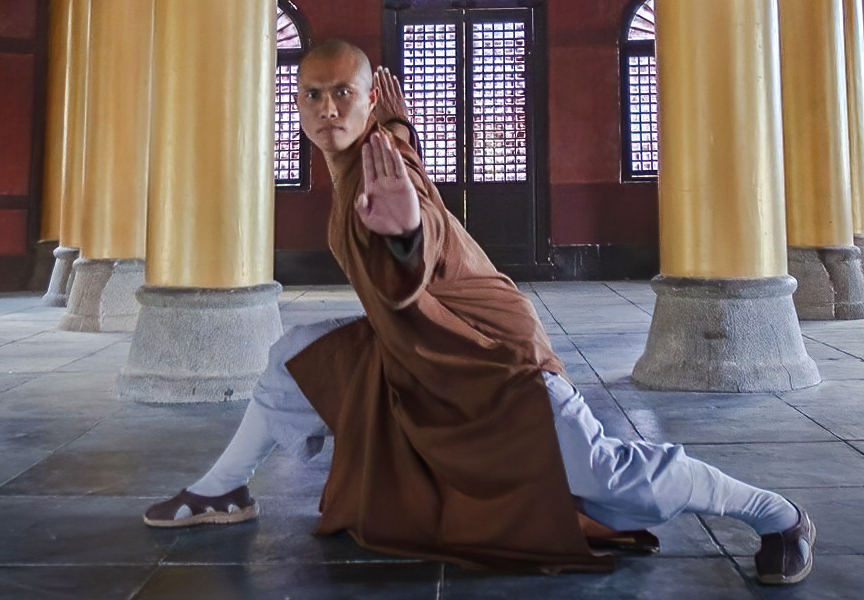
When the hip joints are relaxed, the lower body can act as a stable and flexible base. This allows for the transfer of power from the ground through the legs and into the upper body. Song Kua also plays a crucial role in maintaining the body's center of gravity, preventing stiffness, and promoting a natural and relaxed posture.

Cultivating Mind-Body Connection

Song Kua goes beyond the physical aspect of movement; it extends to the mental and spiritual dimensions of Shaolin Rou Quan. Relaxing the hip joints requires a deep sense of internal awareness and mindfulness. Practitioners must be attuned to the sensations in their bodies, cultivating a mind-body connection that is essential for the effective practice of Shaolin Rou Quan.

As the hip joints relax, tension and stress are released not only from the physical body but also from the mind. This state of relaxation and openness allows practitioners to enter a meditative state, fostering mental clarity, and enhancing the overall benefits of Shaolin Rou Quan for mental well-being.

Incorporating Song Kua into Daily Practice

Integrating Song Kua into daily Shaolin Rou Quan practice involves a gradual and mindful approach. Beginners may focus on simple exercises to increase awareness of the hip joints and promote relaxation. As proficiency develops, practitioners can incorporate the principle into more complex movements, such as the various forms and martial applications of Shaolin Rou Quan.

Regular practice, coupled with guidance from experienced instructors, is key to mastering the art of Song Kua. It is not just a physical technique but a holistic principle that transforms the way practitioners move, think, and experience the art of Shaolin Rou Quan.

Conclusion

In the world of Shaolin Rou Quan, the concept of Song Kua serves as a cornerstone for achieving a harmonious and effective practice. By relaxing the hip joints, practitioners unlock the potential for fluid movements, internal energy cultivation, and a deep mind-body connection. Embracing Song Kua is not only a physical practice but a journey toward greater self-awareness, balance, and well-being through the graceful art of Shaolin Rou Quan.


A Friendly Reminder: All content included on this site, such as text, graphics, logos, button icons, images, audio clips, and software, is the property of Hellenic Shaolin Cultural Center or its content suppliers and protected by US and International Copyright Laws. The compilation (meaning the collection, arrangement, and assembly) of all content on this site is the exclusive property of Hellenic Shaolin Cultural Center and protected by US and International Copyright Laws. Any use of the content on this site, including the reproduction, modification, distribution, transmission, reindex_usation, display, or performance, is strictly prohibited.


Random Free Articles

  • Forms and their use

    Οι Φόρμες και η χρήση τους

    The term Forms means the combination of several techniques, organized by their initiators, in order to present their experience and knowledge from a real battle and which they can pass on to future generations. Masters that created the Forms which have reached to this day, were perfectly aware of the styles, were experienced in the techniques, in order to be able to see the advantages and disadvantages of the form, the techniques, the sequence…

  • Evaluations Over Examinations in Martial Arts

    Αξιολογήσεις ή Εξετάσεις στις Πολεμικές Τέχνες

    A Holistic Approach to Progress Martial arts, beyond being a physical discipline, is a profound journey of self-discovery, discipline, and continuous improvement. Traditional examination systems have long been ingrained in martial arts culture, with students undergoing rigorous testing to advance to the next belt rank. However, a paradigm shift is underway, as many Traditional martial arts schools, and Shaolin in particular, are embracing the…

  • The rescue of the Shaolin arts

    Η διάσωση των τεχνών του Σαολίν

    The Preservation of Shaolin Arts after the Cultural Revolution (1966–1976) in China was a process full of challenges, but also of perseverance, secrecy, and eventually, state recognition. The Shaolin arts include both martial arts (Shaolin Kung Fu) and the Buddhist spiritual tradition. Here's how they were preserved: 1. Secret Preservation by Monks and Lay Practitioners During the Cultural Revolution, the Shaolin Temple was heavily…

  • The Art of Effortless Action

    Η Τέχνη της Αβίαστης Δράσης

    Shaolin Kungfu, an ancient Chinese martial art with a rich history, is not just about physical prowess but also encompasses a profound philosophy. One of the essential philosophical concepts within Shaolin Kungfu is Wuwei [Chin.: Wúwéi 无为], which translates to effortless action or non-doing in English. This concept, plays a crucial role in guiding practitioners to master the art. In this article, we'll delve into the significance of…

  • Embracing Practicality Over Acrobatics

    Πρακτικότητα πέρα από τα Ακροβατικά

    Shaolin Kung Fu, one of the world's most renowned martial arts, has long been associated with its spectacular and awe-inspiring demonstrations of agility, balance, and physical prowess. These displays often feature practitioners performing seemingly superhuman feats of acrobatics and flexibility. While such displays are undoubtedly impressive and entertaining, they can sometimes overshadow the true essence and purpose of Shaolin Kung Fu,…