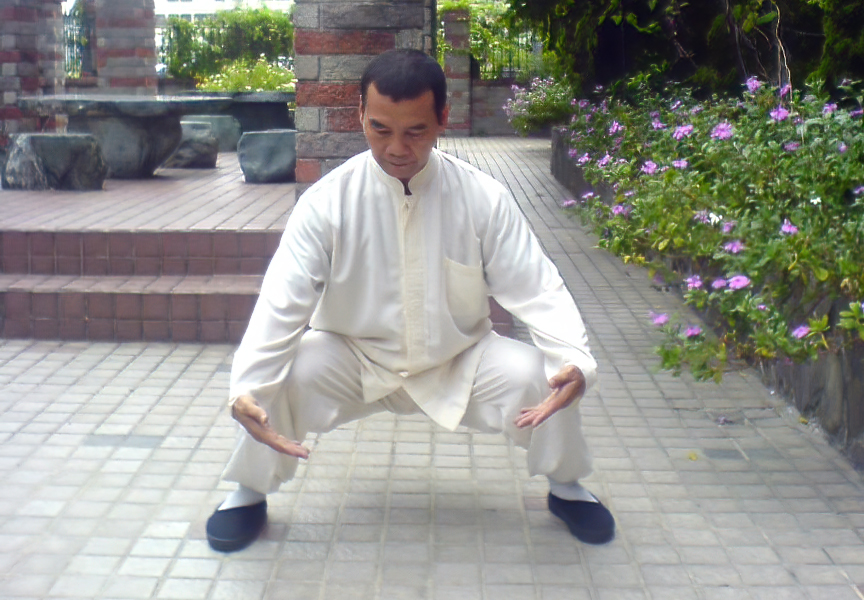
塌腰的精髓
Τhe Εssence of Τayao

FREE ARTICLE. ONLY FOR READING PURPOSES
Copyediting: Information and Relations Office "EPOS"

Η Ουσία του Τα Γιάο


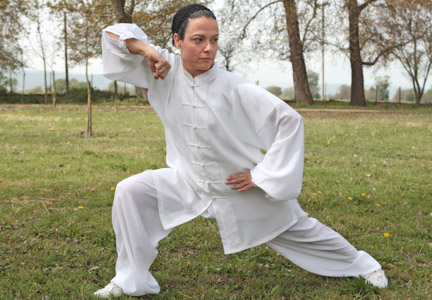
Ta Yao [Chin.: Tā yāo 塌腰], or sinking the waist, is a fundamental principle in Shaolin Rou Quan, which involves lowering the center of gravity and maintaining a flexible and rooted posture. This concept is not unique to Shaolin Rou Quan but is also essential in many other martial arts and sports. It involves dropping the waist and engaging the core muscles, creating a stable base for movement. It is this stability that provides Shaolin Rou Quan practitioners with balance, power, and control.

The Benefits of Ta Yao

Balance and Stability:

Sinking the waist allows practitioners to establish a solid foundation. By lowering their center of gravity, Shaolin Rou Quan practitioners can maintain balance even during challenging movements. This rooted stance makes it difficult for opponents to knock them off balance, enabling a more effective defense and better positioning for counterattacks.

Power Generation:

The lower center of gravity created by Ta Yao allows for efficient power generation. This is achieved through the connection between the waist and the legs. When the waist is relaxed but engaged, power can be transferred smoothly from the legs, through the waist, and into the arms. This whole-body power is one of the defining characteristics of Shaolin Rou Quan, allowing even seemingly gentle movements to generate tremendous force.

Control and Fluidity:

Sinking the waist enables Shaolin Rou Quan practitioners to move with fluidity and grace. The waist acts as a pivot point for the upper body, making it easier to transition from one posture to another smoothly. This fluidity is not only aesthetically pleasing but also functional, as it allows for quicker and more efficient responses in combat situations.

Core Strength:

Sinking the waist engages the core muscles, strengthening the lower back and abdominal muscles. This not only enhances the practitioner's physical fitness but also contributes to improved posture, better spinal health, and overall well-being.

Rooting:

Rooting is a term often used in Shaolin Rou Quan to describe the sensation of being firmly connected to the ground. Sinking the waist is an essential component of rooting. This grounded feeling allows practitioners to absorb force from an opponent and redirect it effectively, reducing the impact of attacks.

The Practice of Ta Yao in Shaolin Rou Quan

To effectively practice Ta Yao in Shaolin Rou Quan, one must focus on the following key elements:

Relaxation: While the waist is engaged, it is also relaxed. Tension in the waist area can hinder fluid movement and power generation. Learning to relax while maintaining engagement is a fundamental skill in Shaolin Rou Quan.

Breath Awareness: Proper breath control is essential when sinking the waist. Practitioners learn to coordinate their breath with movement, helping to maintain balance, focus, and energy flow.

Mind-Body Connection: Shaolin Rou Quan is as much a mental exercise as it is physical. Practitioners must cultivate a deep mind-body connection to fully appreciate and apply the principles of Ta Yao. This involves concentration, visualization, and awareness of the body's internal dynamics.

Conclusion

Ta Yao, or "sinking the waist," is a foundational concept in Shaolin Rou Quan that is critical for achieving balance, power, and control. By lowering the center of gravity, engaging the core, and maintaining a relaxed but rooted posture, practitioners can unlock the true potential of this ancient martial art. Through dedicated practice and a deep understanding of Ta Yao, Shaolin Rou Quan enthusiasts can continue to explore the depths of this graceful yet potent martial discipline, reaping its numerous physical, mental, and spiritual benefits.


A Friendly Reminder: All content included on this site, such as text, graphics, logos, button icons, images, audio clips, and software, is the property of Hellenic Shaolin Cultural Center or its content suppliers and protected by US and International Copyright Laws. The compilation (meaning the collection, arrangement, and assembly) of all content on this site is the exclusive property of Hellenic Shaolin Cultural Center and protected by US and International Copyright Laws. Any use of the content on this site, including the reproduction, modification, distribution, transmission, reindex_usation, display, or performance, is strictly prohibited.


Random Free Articles

  • Martial Arts for Seniors

    Πολεμικές τέχνες για Μεγαλύτερες Ηλίκίες

    Breaking Stereotypes and Embracing Wellness Martial arts has long been associated with strength, agility, and discipline, typically seen as a pursuit for the young and physically fit. However, as attitudes toward aging and health evolve, so does the perception of activities like martial arts for seniors. The question arises: Is martial arts suitable for old people? In this article, we will explore the numerous benefits of martial arts for…

  • Following a Master and the Mind Path in Today's World
    Ακολουθώντας έναν Δάσκαλο και το Μονοπάτι του Νου

    In the fast-paced and modern world we live in today, the pursuit of traditional martial arts and the path of the mind has become an increasingly challenging endeavor. As technology advances and lifestyles evolve, the traditional ways of following a martial arts master and embracing the path of the mind often seem out of sync with the demands of contemporary life. However, for those who embark on this journey, the rewards are profound, offering…

  • Embracing Feminine Leadership

    Αγκαλιάζοντας τη Γυναικεία Ηγεσία

    Following and Accepting a Woman as Our Martial Arts Master In the traditionally male-dominated realm of martial arts, the image of a wise and revered master is often conjured as that of a stern-faced, elderly man imparting his ancient wisdom to a sea of eager disciples. However, as societal norms continue to evolve, so too does our perception of leadership within martial arts. It's time to challenge the status quo and explore the profound…

  • Shaolin Rou Quan in Medicine and Health Promotion
    Σαολίν Ρόου Τσουάν Ιατρική και Προαγωγή Υγείας

    For centuries, the Shaolin Temple in China has been celebrated as the birthplace of martial arts, known for its legendary kung fu techniques and the dedication of its monks. While martial arts are primarily associated with self-defense and physical fitness, there is a lesser-known aspect of Shaolin culture that has been gaining recognition in recent years: Shaolin Rou Quan [Chin.: Shàolín Róu Quán 少林 柔拳]. This gentle and graceful…

  • The Five Skills of Shaolin Soft Fist

    Οι Πέντε Δεξιότητες της Μαλακής Γροθιάς

    The growth and development of Shaolin [Chin: Shàolín 少林] Soft Fist - Rou Quan [Chin: róuquán 柔 拳] unfortunately was not like that of Shaolin Kung Fu. The need for survival forced the monks to focus on strengthening the body and on defense and combat techniques rather than the healing properties and the energy balancing provided by the art of the old monks. Soft Fist - Rou Quan is a great art, which constantly develops the physical…