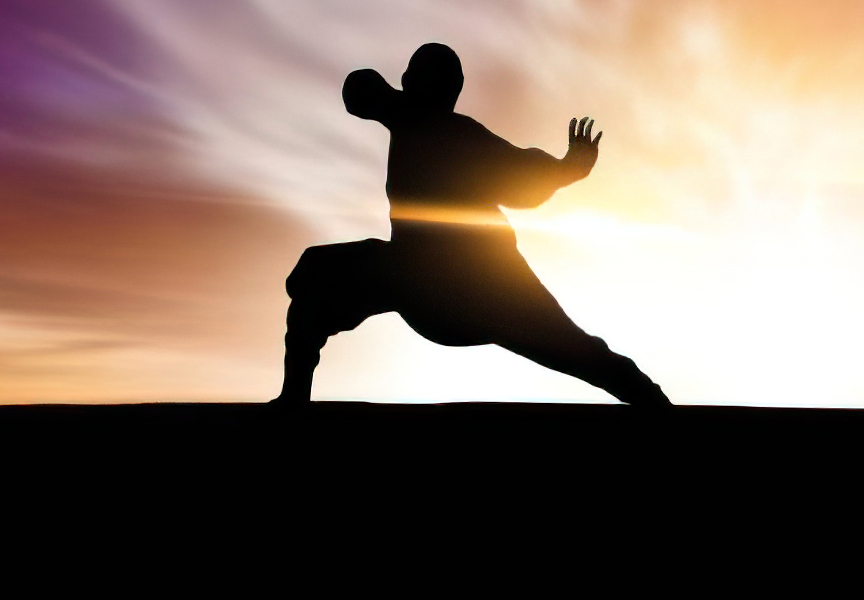
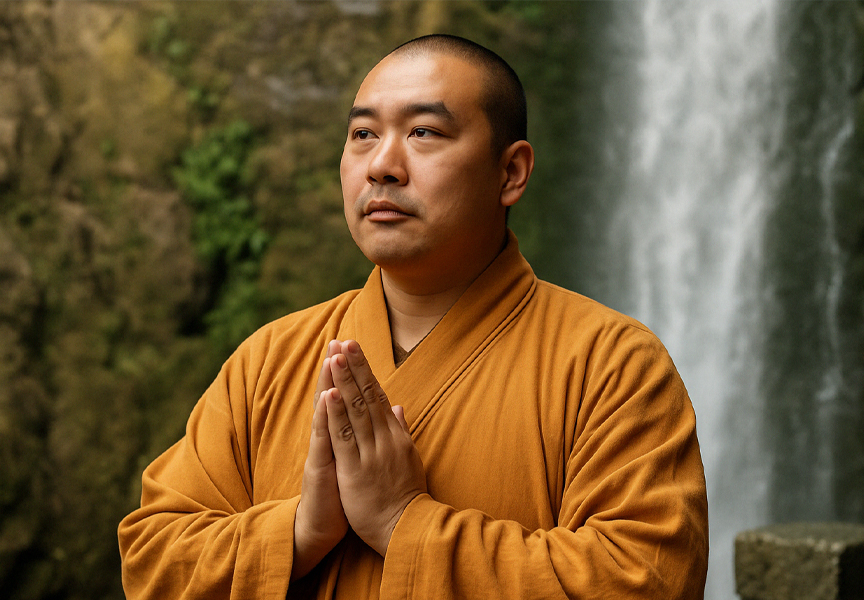
Shaolin Rou Quan [Chin.: Shàolín róu quán 少林柔拳], often referred as Shaolin Rou Gong [Chin.: Shàolín róu Gōng 少林柔功], is a Chinese martial art that has captured the imagination of people around the world for centuries. Rooted in ancient philosophy and imbued with the principles of balance, harmony, and the interplay of opposites, Shaolin Rou Quan offers practitioners a path to physical health, mental clarity, and spiritual growth. Among the myriad techniques and concepts within Shaolin Rou Quan, one that stands out for its significance is Dang Jin [Chin.: dāng jìn 裆劲]. This article explores the essence of Dang Jin and its role in Shaolin Rou Quan.
The Art of Shaolin Rou Quan
Shaolin Rou Quan, is a multifaceted discipline that encompasses various aspects of physical and mental development. It has its origins in ancient Shaolin temple of China, where it was developed as a martial art, a form of exercise, and a means of enhancing one's well-being. The name "Rou" itself is derived from the concept of flexible - gentle, representing the interplay of yin and yang, the fundamental forces of the universe. In Shaolin Rou Quan, the movements and philosophy reflect the balance and harmony inherent in this concept.
Dang Jin: The Essence of Shaolin Rou Quan
Dang Jin, is a fundamental principle in Shaolin Rou Quan. It refers to the ability to "listen" or "sense" the opponent's energy and intention. This concept is closely related to the idea of "listening energy", which is a core aspect of Shaolin Rou Quan practice.
Dang Jin is akin to a form of sensitivity developed through years of practice. It involves staying connected with your opponent's movements and intentions, almost like a dance where you are tuned into their every step. This sensitivity allows a Taiji practitioner to respond effectively and efficiently to an opponent's actions. In essence, it is the art of "reading" your opponent's energy and responding with just the right amount of force and technique, not more, not less.
The Components of Dang Jin
Dang Jin encompasses several key components that contribute to its effectiveness within Shaolin Rou Quan:
Listening Energy [Chin.: Tīng jìn 听劲]: This component involves the ability to feel your opponent's energy, their intentions, and the direction of their force. Through continuous practice, Taiji practitioners develop a heightened sense of awareness that allows them to read their opponent's movements.
Following Energy [Chin.: suíjìn 随劲]: Once you've learned to "listen," the next step is to "follow" your opponent's energy. This means moving in sync with their actions, always staying connected and in control.
Neutralizing Energy [Chin.: Huà jìn 化劲]: Neutralization is a fundamental aspect of Shaolin Rou Quan. When an opponent attacks, the Rou Quan practitioner uses Dang Jin to neutralize the force by redirecting it, essentially using the opponent's energy against them.
Issuing Energy [Chin.: Fā jìn 發劲]: The ultimate goal of Dang Jin is to issue energy effectively. This involves using the opponent's energy against them, often resulting in an efficient and powerful counterattack.
The Significance of Dang Jin in Shaolin Rou Quan
Dang Jin is not just a technique; it's a principle that embodies the essence of Shaolin Rou Quan. It showcases the art's core philosophy of yielding, adapting, and harmonizing with the flow of life. By understanding and applying Dang Jin, practitioners can transform their martial art into a profound life practice.
The sensitivity and awareness developed through Dang Jin extend beyond self-defense and martial applications. Shaolin Rou Quan enthusiasts often report increased mindfulness, stress reduction, and enhanced overall health. The balance and harmony achieved through Dang Jin help individuals not only in self-defense situations but also in navigating the challenges of daily life.
Conclusion
Dang Jin is more than just a technique; it's a philosophy and way of life. It represents the heart and soul of Shaolin Rou Quan, capturing the essence of balance, harmony, and the interplay of opposites. As one delves deeper into the practice of Shaolin Rou Quan and embraces the principle of Dang Jin, they embark on a journey of self-discovery, personal growth, and a profound connection to the world around them. This ancient art, with its timeless wisdom, continues to be a source of inspiration for countless individuals seeking not only physical prowess but also a path to inner peace and well-being.
A Friendly Reminder: All content included on this site, such as text, graphics, logos, button icons, images, audio clips, and software, is the property of Hellenic Shaolin Cultural Center or its content suppliers and protected by US and International Copyright Laws. The compilation (meaning the collection, arrangement, and assembly) of all content on this site is the exclusive property of Hellenic Shaolin Cultural Center and protected by US and International Copyright Laws. Any use of the content on this site, including the reproduction, modification, distribution, transmission, reindex_usation, display, or performance, is strictly prohibited.
In a world where trends and fads come and go like fleeting seasons, martial arts stands as a testament to enduring tradition, discipline, and profound physical and mental development. While some might perceive martial arts as a passing craze or a mere form of entertainment, its roots run deep, and its relevance transcends time. In this article, we will explore why martial arts is not a fad, but rather an enduring practice that has stood the…
Martial arts, with its rich history and diverse forms, is not just about mastering kicks, punches, and self-defense techniques. It also requires an incredible degree of body flexibility. Flexibility is a crucial aspect of martial arts, as it not only enhances one's performance but also helps in preventing injuries. In this article, we will explore the significance of body flexibility in martial arts, its various types, and the benefits it…
Exploring Cultural Evolution and Diversification In the realm of Chinese culture, few symbols carry as much weight and mystique as Kung Fu. For centuries, this ancient martial art has been intertwined with the very fabric of Chinese society, embodying principles of discipline, self-improvement, and tradition. However, as China hurtles forward into the 21st century, the prominence of Kung Fu is undergoing a profound transformation, reflecting…
Combat training and physical response Martial arts, an age-old discipline, is not just about learning how to fight; it is about building character, discipline, and understanding the fine balance between aggression and defense. Central to this training are two crucial components: sparring and the development of a survival instinct. While both are indispensable, their utility varies based on the context and the goals of the practitioner. This…
Over the past few decades, martial arts have exploded in popularity around the globe, bringing a wide range of fighting styles and philosophies to the forefront. Among the most celebrated is Chinese Shaolin Kung Fu—for its deep cultural roots, elegant movements, and philosophical depth. Yet as the art spreads beyond its native borders, a troubling trend has emerged in regions with limited access to authentic instruction: self-styled “Kung…