Martial arts, an age-old discipline, is not just about learning how to fight; it is about building character, discipline, and understanding the fine balance between aggression and defense. Central to this training are two crucial components: sparring and the development of a survival instinct. While both are indispensable, their utility varies based on the context and the goals of the practitioner. This article delves into the significance of sparring and survival instincts in martial arts, highlighting their respective roles and benefits.
The Role of Sparring in Martial Arts
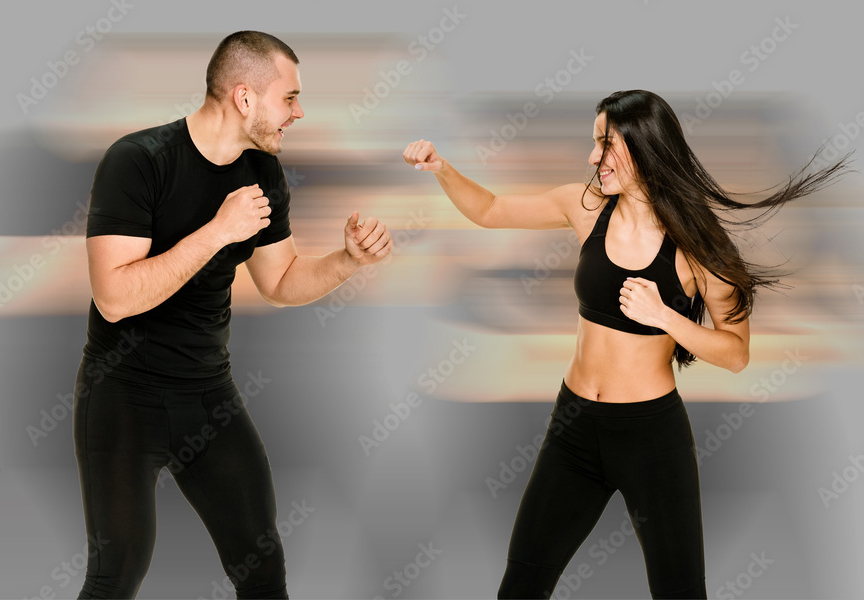
Sparring, often viewed as the practical application of techniques learned during training, serves several vital functions:
Real-Time Application:
Sparring allows martial artists to apply techniques in a controlled yet dynamic environment. This real-time application is crucial for understanding how moves work under pressure and adjusting them as necessary.
Reflex Development:
Engaging in sparring hones reflexes, enabling practitioners to react swiftly and effectively to an opponent’s moves. This quick response is essential in both competitive settings and real-life encounters.
Psychological Conditioning:
Sparring introduces an element of unpredictability, helping students to manage stress and anxiety. Learning to stay calm and composed during sparring sessions translates into better control during actual confrontations.
Improved Timing and Distance:
Understanding timing and maintaining the right distance from an opponent is fundamental in martial arts. Sparring teaches students how to gauge these aspects accurately, enhancing their overall combat efficiency.
Endurance and Stamina:
Regular sparring sessions build physical endurance and stamina, preparing martial artists for prolonged engagements, whether in a ring or a self-defense scenario.
The Significance of Survival Instinct
While sparring is about refining technique and physical conditioning, developing a survival instinct encompasses a broader scope:
Mental Preparedness:
A survival instinct involves cultivating a mindset focused on awareness, adaptability, and resilience. This mental preparedness is crucial for reacting effectively in unexpected or dangerous situations.
Situational Awareness:
Survival instincts heighten a practitioner’s awareness of their surroundings. Recognizing potential threats and understanding how to avoid them is as critical as knowing how to engage in combat.
Instinctual Response:
In high-stress situations, overthinking can be detrimental. A well-honed survival instinct ensures that a martial artist reacts instinctively, relying on ingrained skills and intuition rather than conscious thought.
Versatility in Adversity:
Real-world scenarios are unpredictable. A survival instinct allows for versatility, enabling a martial artist to adapt techniques to a variety of situations, whether dealing with a single attacker or multiple assailants.
Emotional Control:
Maintaining emotional control in life-threatening situations is paramount. A survival instinct helps martial artists keep their emotions in check, ensuring that fear or anger does not cloud their judgment.
Which is More Useful?
Determining whether sparring or survival instinct is more useful in martial arts depends on the context in which these skills are applied. For competitive sports, sparring is indispensable. It equips athletes with the skills, endurance, and psychological readiness to face opponents in the ring. However, for self-defense and real-world applications, developing a survival instinct is arguably more crucial. It prepares individuals not just to fight, but to navigate and survive a myriad of threats, often without physical confrontation.
Integrating Both for Comprehensive Training
Ultimately, a balanced approach that integrates both sparring and survival instinct development is ideal. Sparring provides the practical experience and physical conditioning necessary for effective combat, while survival instincts ensure mental readiness and adaptability in unpredictable situations. Martial artists who excel in both areas are not only formidable fighters but also possess the wisdom and resilience to handle diverse challenges, making them truly well-rounded practitioners.
In conclusion, while sparring sharpens the blade, the survival instinct ensures it is wielded wisely. Both are essential pillars of martial arts training, each contributing uniquely to the art’s profound and multifaceted nature.
A Friendly Reminder: All content included on this site, such as text, graphics, logos, button icons, images, audio clips, and software, is the property of Hellenic Shaolin Cultural Center or its content suppliers and protected by US and International Copyright Laws. The compilation (meaning the collection, arrangement, and assembly) of all content on this site is the exclusive property of Hellenic Shaolin Cultural Center and protected by US and International Copyright Laws. Any use of the content on this site, including the reproduction, modification, distribution, transmission, reindex_usation, display, or performance, is strictly prohibited.
Shaolin Rou Quan [Chin.: Shàolín róu quán 少林柔拳], often simply referred to as Shaolin Rou Gong, is a martial art and a holistic exercise system that has been practiced for centuries. One of the key aspects that make Shaolin Rou Quan unique and effective is the incorporation of the "eight basic methods of practice." These methods, Peng, Lu, Ji, An, Cai, Lie, Zhou, and Kao, are fundamental to understanding and mastering this…
Walking into a Martial Arts Dojo for the First Time Embarking on the journey of learning martial arts can be a daunting prospect for many. The mystique surrounding the dojo and the myriad of preconceived notions can create mental barriers, often discouraging individuals from taking that first step through the front door. This article aims to demystify the most challenging part of starting martial arts – the initial act of walking into the…
In a world that celebrates athletic prowess and competitive sports, it's easy to overlook the profound distinction between sports and holistic arts like Shaolin Kung Fu. While both require dedication, discipline, and physical conditioning, they serve different purposes and encompass distinct philosophies. Shaolin Kung Fu, deeply rooted in ancient Chinese culture, is a holistic art that encompasses not only physical strength but also…
The Responsibility of Practicing Traditional Martial Arts In a world where trends come and go with the blink of an eye, traditional martial arts stand as bastions of timeless wisdom, discipline, and cultural heritage. Rooted in centuries of history and philosophy, these martial arts aren't merely physical disciplines but profound systems of self-improvement and ethical conduct. However, as the popularity of martial arts grows, so does the…
Martial Arts Compulsory in Educational Institutions for a Healthier Society In today's fast-paced and increasingly sedentary world, the importance of physical activity cannot be overstated. Sedentary lifestyles contribute to a myriad of health issues, ranging from obesity to cardiovascular diseases. As societies grapple with these challenges, it becomes imperative to explore innovative solutions to promote physical well-being. One such…