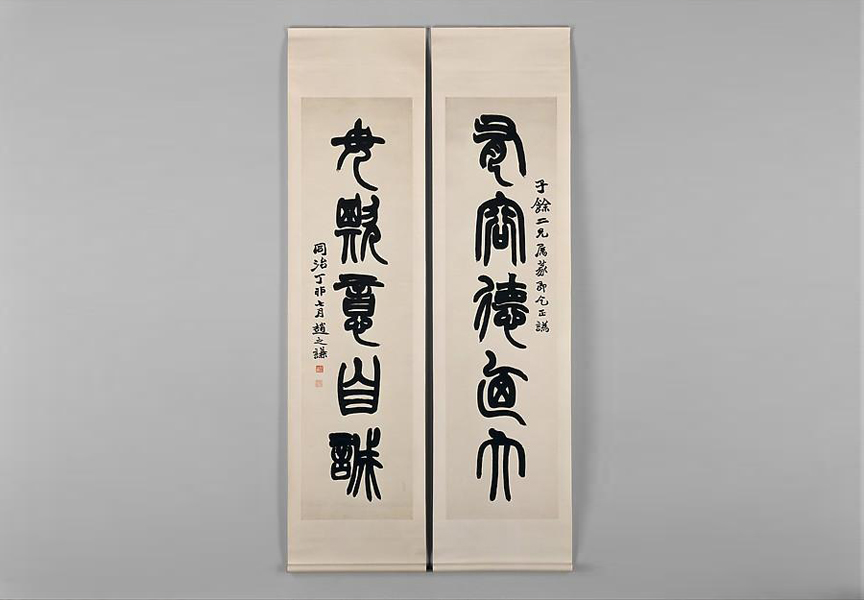
少林功夫学校的纸刻对联
Paper Engraved Couplets

FREE ARTICLE. ONLY FOR READING PURPOSES
Copyediting: Information and Relations Office "EPOS"

Ποίηση σε χαρτί σε σχολές Σαολίν


Paper Engraved Couplets in a Shaolin Kung Fu School

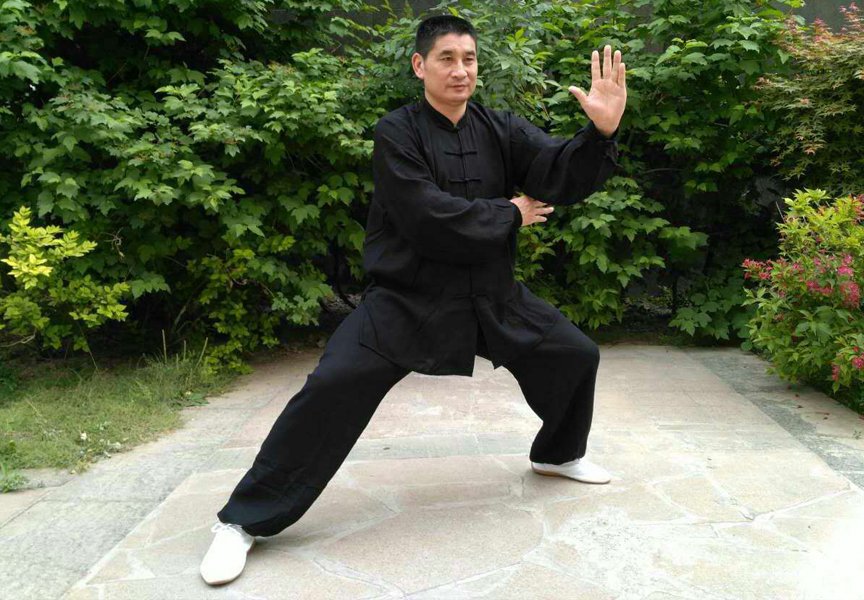
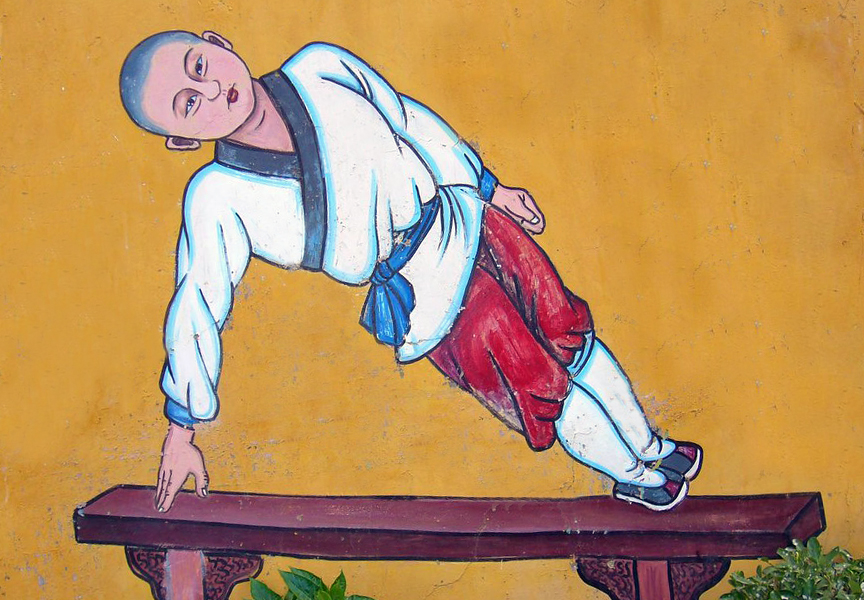
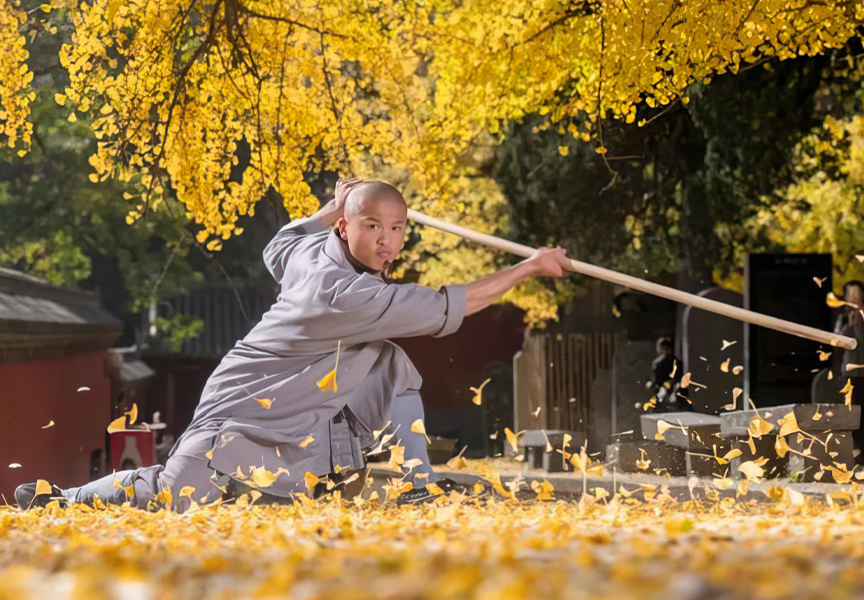
In the tranquil courtyards of a traditional Shaolin Kung Fu school, amidst the echoes of ancient martial arts techniques, there exists a practice that transcends physical prowess – the art of paper engraved couplets (Zhǐ kè duìlián 纸刻对联). Within these hallowed grounds, where discipline meets spirituality, these delicate paper creations adorn the walls, serving as both a testament to tradition and a source of inspiration for the martial artists who train within.

Originating from the rich cultural tapestry of China, couplets have been an integral part of Chinese tradition for centuries. They consist of two lines of poetry, typically written in parallel and adorned with exquisite calligraphy. These couplets are often displayed during festive occasions or as decorative elements to convey auspicious messages. However, within the confines of a Shaolin Kung Fu school, they take on a deeper significance.

The art of paper engraved couplets requires a meticulous hand and unwavering patience. Practitioners carefully carve intricate designs and characters onto delicate paper, using specialized tools to create a masterpiece of artistic expression. Each stroke is imbued with intention, reflecting the wisdom of generations past and the resilience of the human spirit.

At the heart of a Shaolin Kung Fu school, these paper engraved couplets serve as silent guardians, watching over students as they undergo rigorous training and spiritual enlightenment. Adorning the walls of training halls and meditation chambers, they inspire discipline, focus, and a deep connection to the ancient traditions of Shaolin.

For the masters who oversee the training, the presence of these couplets is a reminder of their responsibility to preserve and transmit the teachings of Shaolin Kung Fu. They serve as a bridge between the past and the present, linking generations of practitioners through the timeless wisdom encapsulated within their delicate forms.

Beyond their aesthetic appeal, paper engraved couplets hold symbolic significance within the Shaolin tradition. The process of carving them requires a profound level of concentration and mindfulness, mirroring the meditative state achieved through the practice of Kung Fu. Each stroke is a meditation in itself, a reflection of the practitioner's inner journey towards self-discovery and enlightenment.

In a world where ancient traditions often fade into obscurity, the practice of paper engraved couplets in Shaolin Kung Fu schools stands as a testament to the enduring power of cultural heritage. Through the dedication of master craftsmen and the reverence of students, these delicate creations continue to thrive, preserving the essence of Shaolin wisdom for generations to come.

As the sun sets over the tranquil courtyards of the Shaolin Kung Fu school, the paper engraved couplets cast long shadows, whispering secrets of strength, discipline, and inner peace. They are more than just decorative ornaments; they are guardians of tradition, symbols of resilience, and beacons of inspiration for all who walk the path of Shaolin Kung Fu.


A Friendly Reminder: All content included on this site, such as text, graphics, logos, button icons, images, audio clips, and software, is the property of Hellenic Shaolin Cultural Center or its content suppliers and protected by US and International Copyright Laws. The compilation (meaning the collection, arrangement, and assembly) of all content on this site is the exclusive property of Hellenic Shaolin Cultural Center and protected by US and International Copyright Laws. Any use of the content on this site, including the reproduction, modification, distribution, transmission, reindex_usation, display, or performance, is strictly prohibited.


Random Free Articles

  • Regulating and Balancing Qi

    Ρύθμιση και εξισορρόπηση Qi

    A Holistic Approach to Health and Well-Being The concept of Qi, often pronounced as "chi," is a fundamental principle in traditional Chinese medicine (TCM) and various Asian cultures. Qi represents the vital life force or energy that flows through the human body and the universe, influencing our physical, mental, and spiritual well-being. According to TCM, maintaining a harmonious flow of Qi is essential for good health. Regulating…

  • The Shaolin Duan Pin System

    Το Σαολίν Ντουάν Πιν

    Analysis and the Need for Its Creation Shaolin martial arts have a history of over 1,500 years, closely linked with Chan (Zen) Buddhism, Chinese cultural heritage, and traditional combat practices. However, as times change and society’s needs evolve, there arose the necessity for a modern, organized, and pedagogically sound training system. Within this context, the Shaolin Duan Pin System (Chin.: Shàolín gōngfū duàn pǐn zhì…

  • Shaolin Rou Quan in Medicine and Health Promotion

    Σαολίν Ρόου Τσουάν Ιατρική και Προαγωγή Υγείας

    For centuries, the Shaolin Temple in China has been celebrated as the birthplace of martial arts, known for its legendary kung fu techniques and the dedication of its monks. While martial arts are primarily associated with self-defense and physical fitness, there is a lesser-known aspect of Shaolin culture that has been gaining recognition in recent years: Shaolin Rou Quan [Chin.: Shàolín Róu Quán 少林 柔拳]. This gentle and graceful…

  • Dantien

    Ταντιέν

    The Energetic Center of Vitality and Balance In the realm of traditional Chinese medicine and martial arts, the concept of the "Dantien" [Chin.: dāntián 丹田] stands as a fundamental and integral part of understanding the body's energy system. Pronounced "dan-tee-en," this term refers to energy centers within the body that play a pivotal role in the cultivation and management of vital energy, or Qi (also spelled…

  • The rescue of the Shaolin arts

    Η διάσωση των τεχνών του Σαολίν

    The Preservation of Shaolin Arts after the Cultural Revolution (1966–1976) in China was a process full of challenges, but also of perseverance, secrecy, and eventually, state recognition. The Shaolin arts include both martial arts (Shaolin Kung Fu) and the Buddhist spiritual tradition. Here's how they were preserved: 1. Secret Preservation by Monks and Lay Practitioners During the Cultural Revolution, the Shaolin Temple was heavily…